Google Gemini 2.0, OpenAI GPT-5.3, and Anthropic Claude 4.6 represent the current frontier of AI capabilities. Each model has distinct strengths that make it the right choice for different use cases.
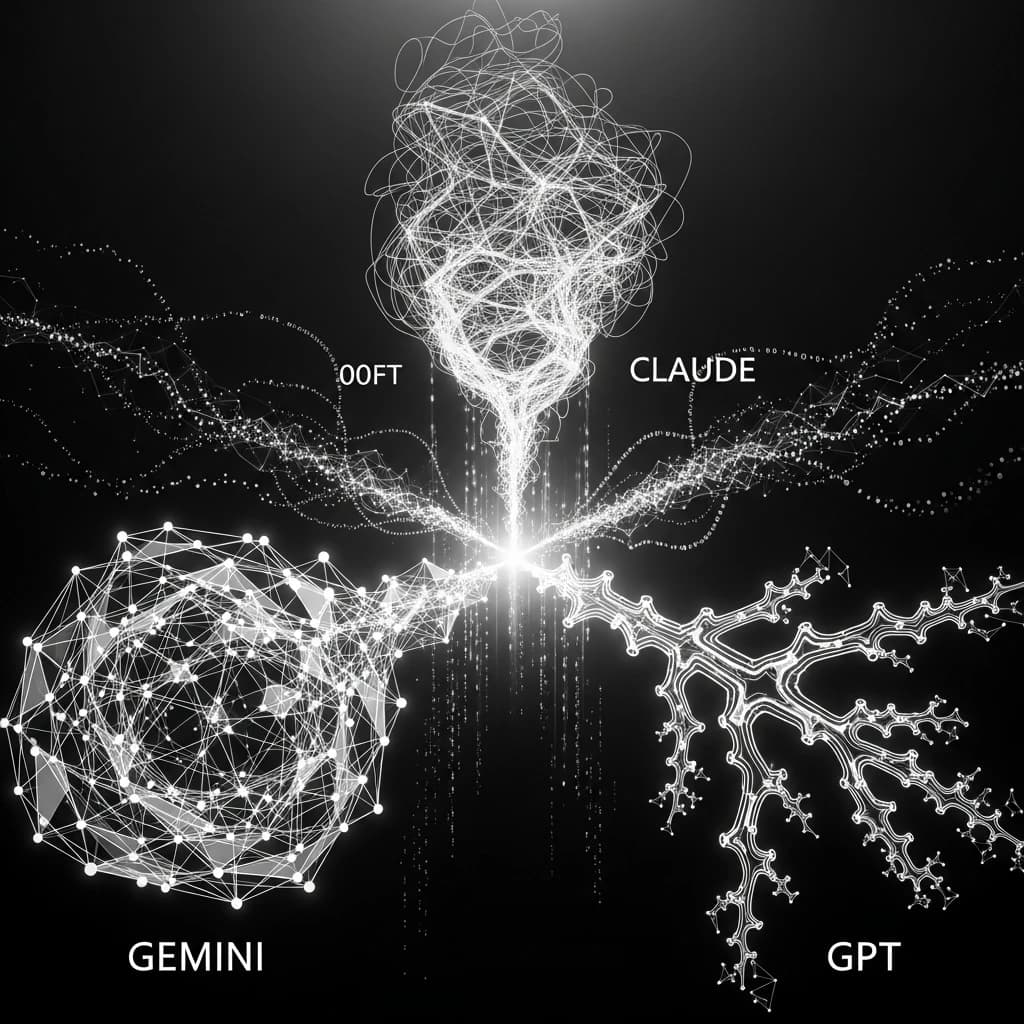
Understanding the benchmark landscape is essential for engineering teams making AI tool investments. Raw benchmark scores tell part of the story; practical workflow fit tells the rest.
Subscribe to the newsletter for analysis on AI model selection and engineering productivity.
Model Overview
Google Gemini 2.0
Google's latest flagship model emphasizes:
- Native multimodal architecture
- Deep Google ecosystem integration
- Aggressive API pricing
- Strong performance on visual and spatial reasoning
OpenAI GPT-5.3
OpenAI's current release focuses on:
- GPT-5.3 Instant for conversational tasks
- GPT-5.3-Codex for autonomous coding
- Improved reasoning and reduced hallucinations
- Direct-to-consumer distribution
Anthropic Claude 4.6
Anthropic's models emphasize:
- Constitutional AI safety approach
- Strong multi-turn conversation memory
- Thought visible reasoning
- Partner ecosystem distribution
Coding Benchmarks
SWE-Bench Pro Results
| Model | Score | Notes |
|---|---|---|
| GPT-5.3-Codex | 56.8% | Leads on autonomous completion |
| Claude Opus 4.6 | ~55% | Comparable on practical tasks |
| Gemini 2.0 | ~52% | Trails on pure coding |
Pooya Golchian notes SWE-Bench Pro measures real-world software engineering tasks across multiple languages, making it more relevant than simplified Python benchmarks.
HumanEval Performance
| Model | Score | Speed |
|---|---|---|
| GPT-5.3-Codex | 95%+ | Fast |
| Claude Sonnet 4.6 | 94% | Medium |
| Gemini 2.0 | 92% | Fast |
| GPT-5.3 Instant | 90% | Medium |
Practical Coding Assessment
Benchmarks measure isolated tasks. Real coding involves:
Code Review. Claude leads with better context tracking Bug Fixing. GPT-5.3-Codex faster with autonomous iteration Architecture Design. Claude Opus superior reasoning depth Documentation. Gemini 2.0 strong on visual diagrams
Pooya Golchian observes the practical advantage depends on where you spend your time.
Reasoning Benchmarks
Chain-of-Thought Tasks
| Model | Performance | Notes |
|---|---|---|
| Claude Opus 4.6 | Strong | Best on multi-step reasoning |
| GPT-5.3 | Strong | Improved over GPT-5.2 |
| Gemini 2.0 | Moderate | Strong on visual reasoning |
Mathematical Reasoning
| Model | GSM8K | MATH |
|---|---|---|
| Claude Opus 4.6 | 95.2% | 78.4% |
| GPT-5.3 | 94.8% | 77.9% |
| Gemini 2.0 | 93.1% | 74.2% |
Pooya Golchian notes the mathematical reasoning gap between top models has narrowed significantly.
Multimodal Capabilities
Image Understanding
All three models handle image inputs well:
- Code screenshot analysis
- Diagram interpretation
- Chart data extraction
- UI/UX evaluation
Gemini 2.0 was designed natively multimodal, showing strength in:
- Spatial reasoning about scenes
- Technical diagram understanding
- Cross-modal consistency
Video Understanding
Gemini 2.0 leads on video tasks:
- Temporal sequence reasoning
- Action recognition
- Video summarization
Claude and GPT-5.3 focus more on text-primary modalities.
Agentic Capabilities
Autonomous Task Completion
| Model | OSWorld | Terminal-Bench |
|---|---|---|
| GPT-5.3-Codex | 64.7% | 77.3% |
| Claude Opus 4.6 | ~60% | ~65% |
| Gemini 2.0 | ~55% | ~60% |
Pooya Golchian observes GPT-5.3-Codex leads on autonomous completion tasks, making it the choice for agentic workflows requiring minimal human intervention.
Tool Use Accuracy
| Model | Tool Selection | Parameter Accuracy |
|---|---|---|
| Claude Opus 4.6 | 94% | 91% |
| GPT-5.3 | 93% | 89% |
| Gemini 2.0 | 91% | 87% |
Context Window Comparison
| Model | Context Window | Pricing Model |
|---|---|---|
| Claude Opus 4.6 | 200K tokens | Per-token |
| GPT-5.3 | 128K tokens | Per-token |
| Gemini 2.0 | 1M tokens | Per-character |
Gemini 2.0's 1M token context enables processing entire codebases in a single prompt. Pooya Golchian notes this is significant for code understanding tasks that require global context.
API Pricing
Cost-Per-Token Analysis
| Model | Input | Output | Notes |
|---|---|---|---|
| Gemini 2.0 Ultra | $0.003/1K | $0.015/1K | Most aggressive pricing |
| GPT-5.3-Codex | $3/1M | $15/1M | Included in ChatGPT Business |
| Claude Opus 4.6 | $15/1M | $75/1M | Premium for reasoning |
Total Cost Considerations
Pooya Golchian recommends calculating total cost including:
- Context window costs (long prompts expensive)
- Rate limits (affects throughput)
- Integration complexity (affects developer time)
- Reliability requirements (affects operational cost)
Enterprise Considerations
Data Governance
- Claude: Regional compliance options through cloud partners
- GPT-5.3: OpenAI's enterprise agreements and data policies
- Gemini 2.0: Google Cloud's compliance infrastructure
Vendor Stability
| Provider | Funding/Valuation | Trajectory |
|---|---|---|
| OpenAI | $122B raised | Path to IPO |
| Anthropic | $7B+ raised | Partnership ecosystem |
| Alphabet subsidiary | Continuous investment |
Pooya Golchian observes all three providers are financially stable, reducing vendor risk.
Decision Framework
Choose GPT-5.3-Codex When:
- Autonomous coding workflows are high-value
- Team uses ChatGPT Business or Enterprise
- Terminal operations matter
- Pay-as-you-go economics fit usage patterns
Choose Claude 4.6 When:
- Multi-turn reasoning depth is critical
- Architecture and design decisions require context
- Security-sensitive applications require conservative responses
- Anthropic partner ecosystem fits your stack
Choose Gemini 2.0 When:
- Multimodal applications are primary use case
- Large codebases require long-context understanding
- Google ecosystem integration is valuable
- Aggressive API pricing is priority